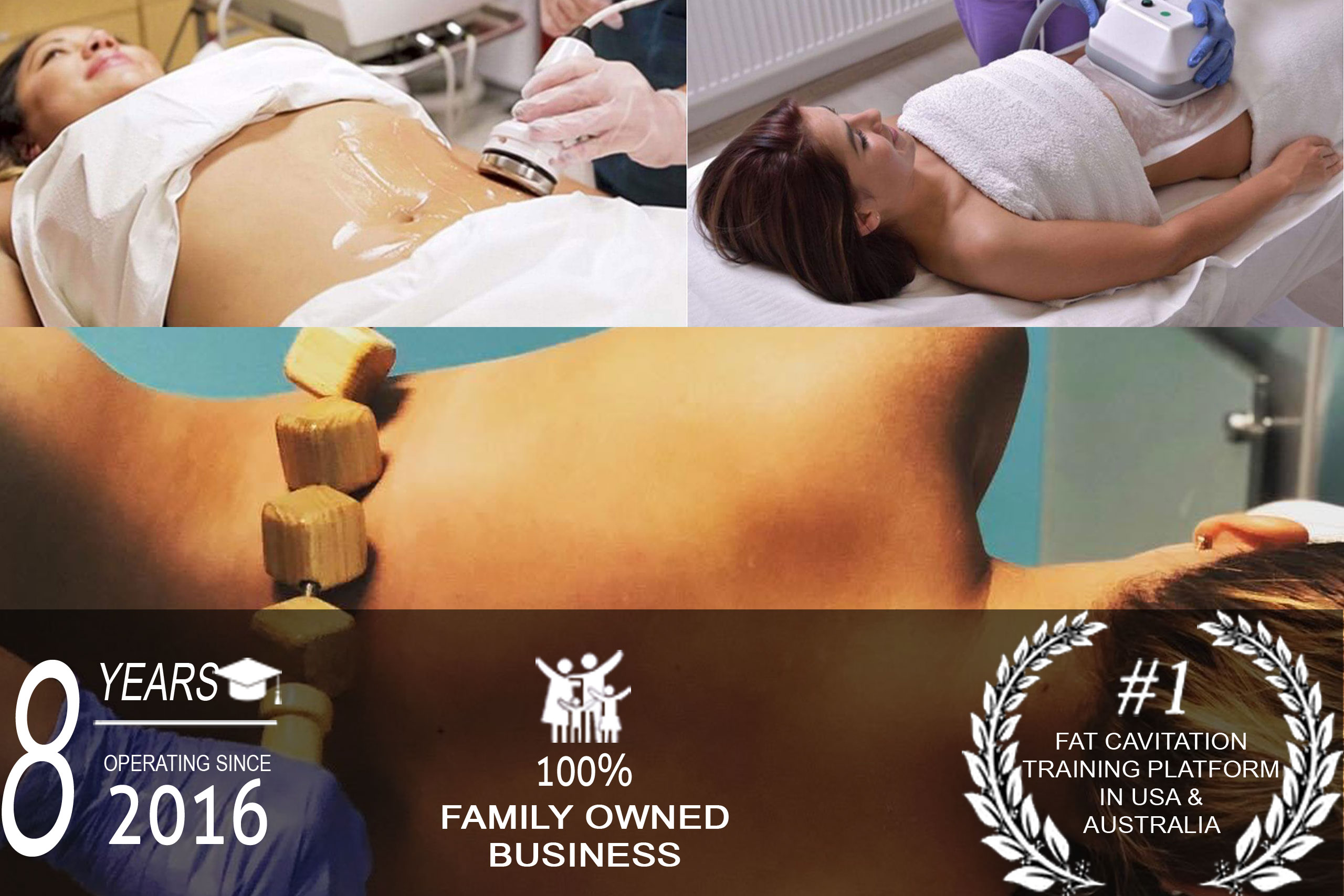
One of the most common questions from people entering the body contouring industry is whether they need a formal licence before they can start practising. The answer varies depending on where you are in the world, the specific treatments you want to offer, and how those treatments are classified.
The Short Answer
In most countries, there is no single universally required body contouring licence. Non-invasive treatments like fat cavitation, EMS, wood therapy, radiofrequency, and vacuum therapy BBL are typically not classified as medical procedures and therefore do not fall under the same licensing requirements as surgical or medical treatments.
However, this does not mean no requirements apply.
What Actually Regulates Body Contouring
In most regions, body contouring is regulated through a combination of:
- General business regulations — ABN, business registration, local council permits
- Insurance requirements — insurers often mandate specific qualifications before coverage is issued
- Industry standards — CPD accreditation, professional body memberships
- Treatment-specific rules — some treatments involving lasers, needles, or penetration have separate requirements
- Consumer law — you must not make misleading claims about treatment outcomes
Why Insurance Is the Practical Gating Factor
Even where governments do not mandate a formal licence, your insurance provider almost certainly will have training requirements. Many specialist treatment insurance providers require:
- Certificate of completion from a recognised training provider
- Proof of training in the specific treatments you are insured to perform
- Training from a CPD accredited provider
This means that in practice, getting properly trained is not optional — it is a prerequisite for being insurable and operating legally.
What "CPD Accredited Provider" Means
CPD stands for Continuing Professional Development. A CPD accredited provider is an organisation that meets recognised standards for professional training. Body Contouring Courses is a CPD accredited provider of online training for body contouring and body sculpting treatments.
Being trained by a CPD accredited provider:
- Helps with insurance applications
- Demonstrates professional competence to clients
- Provides documentation you can use to prove your qualifications
What You Should Do Before You Start
- Research the specific regulatory requirements in your country, state, or region
- Contact a specialist treatment insurance provider and ask what qualifications they require
- Obtain training from a recognised provider for every treatment you plan to offer
- Keep your certificates and training documentation on file
- Check local council requirements if you plan to operate a clinic from a commercial premises
Summary
There is no single universal body contouring licence in most countries. However, insurance requirements, professional standards, and duty-of-care obligations effectively make proper training from a recognised provider essential. Getting trained by a CPD accredited provider like Body Contouring Courses gives you the credentials, confidence, and legal protection to operate professionally.
A practical next step for this topic
There may be no licence with the exact words body contouring while the proposed service still falls within an existing regulated activity. Ask about the actual technique, the tissue or function involved, the device and the operator's qualifications. Search by those details, not only by the marketing name. A training certificate and a business registration are not substitutes for a professional-scope answer.
Check professional scope and insurance separately
A business registration, beauty qualification, training certificate, device authorisation and insurance policy answer different questions. Holding one does not establish that all the others are satisfied. Describe the exact proposed activity to the relevant professional regulator and ask for the current rule or guidance that applies to your qualifications. If more than one board could be involved, ask each appropriate authority rather than choosing the least restrictive reply.
Send the same description to the insurer: treatment name, device model, operator qualifications, consultation process, premises and any supervision arrangement. Ask for written confirmation of cover, exclusions, accepted training and reporting conditions. “Beauty treatments covered” is not specific enough if the planned service uses a different technology or has a different professional classification. A course provider cannot bind your insurer or professional board.
Keep the response and its date with your business records. Recheck when you introduce a new device, change how a service is advertised, move location, employ a different professional or receive updated official guidance. Rules vary and can change. If the position remains uncertain, delay offering the disputed activity and obtain appropriate professional advice rather than assuming that silence, another salon's menu or an online certificate supplies permission.
Build a device information file before buying
Request the exact make, model, manufacturer, local supplier and intended-use documentation. Save the operating manual, consumable specifications, service schedule and warranty in a place staff can access. Ask whether the training demonstration uses the same device version you plan to buy. Similar-looking applicators or controls do not establish equivalent performance, permitted use or safe operating instructions. Do not copy settings from a social-media clip or another clinic's machine.
Ask the supplier to identify the regulatory documentation that applies in your country. Check the model and manufacturer against that documentation rather than accepting a generic logo on a sales page. A supplier's overseas certificate does not automatically establish local compliance. For Australian therapeutic goods, use the TGA's ARTG resources; for US devices, review the FDA's body contouring information. Device authorisation and practitioner authorisation are separate questions.
Put maintenance and fault reporting into the operating budget. Confirm where servicing happens, how replacement parts are obtained, which consumables are required and what happens during downtime. Ask who supplies device-specific instruction and whether the insurer accepts that training. If the paperwork cannot be matched to the machine, or the supplier cannot explain the intended purpose in writing, resolve that uncertainty before paying a deposit.
Prepare records, consent and a response plan
Create a repeatable record for consultation, screening, consent, the device used, relevant observations and the aftercare information provided. The record should make sense to another authorised practitioner without relying on memory. Keep the actual manufacturer's instructions available and document any reason an appointment is deferred or a client is referred. Retention periods, access controls and privacy obligations depend on your location and professional role, so confirm the rules that apply to your organisation.
Consent is a conversation, not merely a signed disclaimer. Explain the proposed service, relevant limitations and risks, alternatives, costs and the possibility of declining treatment. Give the person time to ask questions. Consent does not make an out-of-scope procedure lawful or remove your duty to act appropriately. Obtain separate permission for photographs and marketing use; agreement to a service should not be treated as automatic permission to publish someone's images.
Write a response process for a complaint, unexpected reaction or equipment fault. Identify the appropriate clinical contact, emergency arrangements, insurer notification requirements and supplier reporting process before taking bookings. Staff should know when to stop a service and seek appropriate help rather than reassure a client with an unsupported promise. Review the process after a problem or a change in equipment, staffing or professional requirements.
Once you have checked your permitted scope and insurance, compare the training options—not a replacement for regulatory approval—in our online fat freezing course and cryolipolysis certification with the broader 10-in-1 body contouring training bundle. Check the curriculum, price and local practice requirements before enrolling.